Good Day,
The municipal election is next month. I had a candidate come to my door in Georgetown and I asked him point blank about what he was going to do to attract and retain more visitors. I liked him because he actually said, “I hadn’t thought about that. But it makes sense.” He then, without prompting, connected the dots between the missed opportunity of having a hugely popular outlet mall just ten minutes from a struggling historic main street. “If we just worked on getting some of those people at the outlets to explore the rest of the community, more businesses would benefit,” he concluded.
This got me thinking that the visitor economy is probably not on the radar of many of the hundreds of candidates jockeying for a seat on their municipal council. To me, it seems strange that the one industry that is shared with every community, that employs a substantial % of the workforce in each community and that continues to grow regardless of economic uncertainty is an afterthought. In my mind, visitor growth equals economic growth. And I set out to prove that using my good friend, ChatGPT. Follow me down the rabbit hole…
I provided Chat with the most recent geofence data we had for every municipality in our region. I then told it I wanted to answer the question, “do communities that attract a higher percentage of visitors also experience stronger population and business growth?” The short answer was no. The analysis found no strong or statistically significant relationship between the percentage of visitors travelling more than 40 kilometres and overall municipal population or business growth. There are simply too many other factors influencing municipal growth—from housing and available land to infrastructure, transportation, employment and planning policy.
However, Chat recognized something that I have been saying for years; our definition of “local” is hiding millions of visits by non-residents. By definition, a tourist is someone that travels more than 40kms each way. However, from a municipal standpoint, having someone from Aurora spend money at the Upper Canda Mall in Newmarket is new money injected into the community, supporting a job and that staff member’s ability to buy local groceries and pay local rent/mortgage.
40kms makes sense for many tourism research purposes, but it creates a problem when we are trying to understand the economic market of an individual municipality. So, I uploaded a ton more data which allowed Chat to break up visitation into three groups:
- Municipal Residents — people who actually live in the municipality.
- Near-Market Visitors — people who live outside the municipality but within 40 kilometres.
- Destination Visitors — people travelling 40 kilometres or more.
The results changed our understanding of the visitor economy considerably. Municipal boundaries are not customer boundaries. Across every community in our region, people from outside the municipality account for a substantial portion of measured visitation.
In Newmarket, for example, approximately 61% of measured visits to the Main Street area and Upper Canada Mall came from people who do not live in Newmarket. Only about 12% of total visits originated from 40+ kilometres away. The much bigger story was the nearly 49% of visits made by people living elsewhere within 40 kilometres.
In Orangeville, approximately 59% of measured Downtown visits came from non-residents. In Erin, it was approximately 67%. In Caledon, approximately 75% of measured visits to the three areas studied came from outside the municipality. I had Chat take the average of all inputted data and found that almost 57% of all visitation to our main streets and destinations are made by non-residents. 57%!!!
| Category | Average % of Unique Visitor Entries | Average % of Total Visits |
| Municipal residents | 17.1% | 43.4% |
| Near-market visitors — non-residents within 40 km | 49.5% | 39.2% |
| Destination visitors — 40+ km | 33.4% | 17.3% |
| All non-residents | 82.9% | 56.6% |
This was way more than even I was suspecting. And if that is news to me, you can imagine it is unfathomable to the future decision-makers in our municipalities. This illustrates that: A community’s resident population does not represent the full customer market available to its businesses. Keeping with the belief that visitation is firmly rooted in economics, we called it “The Visitor Dividend”.
That led us to rethink the question we were asking. Instead of trying to demonstrate that more tourism automatically produces greater municipal growth, we began looking at what we identified as the visitor dividend. Every community has a resident economy. Residents shop, eat in restaurants, attend events, visit attractions and use recreational and cultural amenities. But residents aren’t the only customers. Every person who enters a municipality from somewhere else represents potential additional demand for its restaurants, retailers, accommodations, attractions, entertainment venues, recreation businesses, cultural organizations and events.
That spending doesn’t replace resident spending. It adds to it. And that leads to a simple but important economic-development idea: Businesses don’t operate within municipal boundaries; they operate within customer markets. A restaurant in a community of 20,000 people may not really have a market of 20,000 people. Its potential market can include hundreds of thousands of people living nearby, plus destination visitors travelling from considerably farther away.
Tourism and destination development can therefore be viewed not simply as efforts to attract “tourists,” but as ways of expanding the effective customer market available to a community. This will also benefit the residents. The restaurants, shops, downtowns, festivals, attractions, trails, recreation opportunities and cultural experiences that attract visitors are also the places residents use and enjoy. A larger customer market can provide additional demand for those businesses and experiences. Stronger businesses employ people, purchase goods and services, invest in their operations and contribute to active commercial areas.
That doesn’t mean tourism alone creates prosperous communities, and (unfortunately) the research doesn’t support that claim. What the data does show is something more precise: people from outside municipal boundaries are already an important part of the customer base supporting the communities.
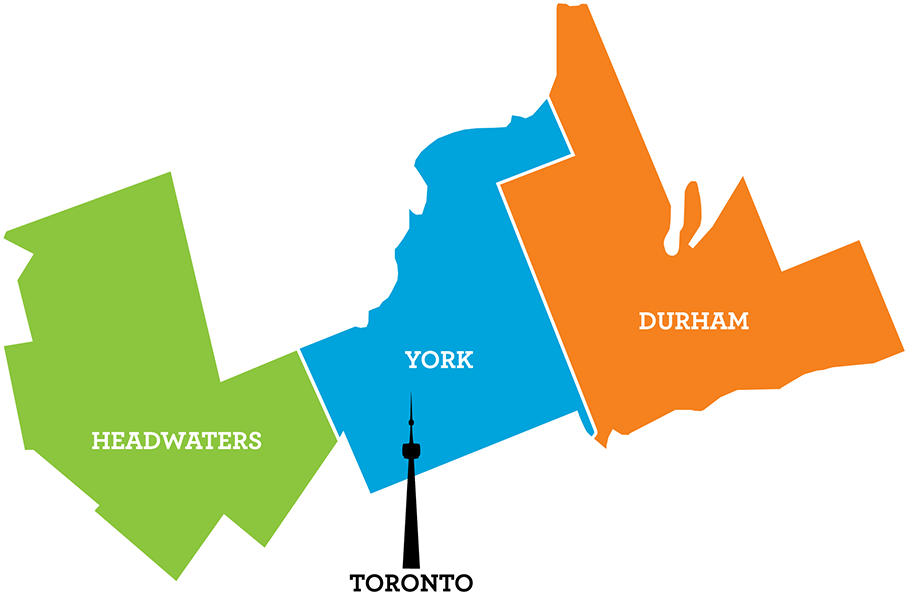
Armed with this knowledge and supporting data, Central Counties Tourism is now developing individual Visitor Dividend profiles for municipalities across York, Durham and Headwaters. Each will look beyond the traditional “locals versus tourists” definition and show the relationship between municipal residents, near-market visitors and destination visitors, along with other indicators that help illustrate the importance of the visitor economy.
Click on any report below to learn more about the visitor market supporting that community.


To view the Visitor Dividend profiles for other communities within York, Durham or Headwaters, click here.
The objective isn’t to prove that every community should pursue the same tourism strategy. It’s to provide every candidate with a clearer picture of something that is easy to overlook: Your community is bigger than its population. Or, perhaps more accurately: Your community’s market is.
Have a great day!
Chuck