CIAO!!
I have just returned home from two weeks in Italy with Trish, my dad and my sister. We spent six days in Tuscany, four in Sorrento and four in Sicily. I had no idea how hilly the Italian coast is. If it weren’t for the wine and incredible food that I gorged myself on, I may have actually lost some weight on this trip…
I also have a new respect for our roads and traffic systems. I expected Italy to be much like the other European countries I have been to, meaning that walking and public transit were the main transportation methods, minimizing the traffic on the narrow roads that were first built long before cars were a thing. While there are fairly robust transportation systems in place (we took the high-speed train from Florence to Naples), the citizens of the country love their personal vehicles. Every street is lined bumper to bumper with cars, motorcycles and mopeds. In the historic cities we visited, the sidewalks were often very narrow, which meant sometimes having to share the road with the cars, small trucks and full-sized buses that were creeping their way to their final destinations. It was a site to behold, and something I will not soon forget. Having said all of that, I think I heard three honks in two weeks. The patience level of the drivers is impressive.
We did two fantastic experiences that I want to talk about today, because I believe there is an opportunity for some of our businesses to do something similar. The first was a truffle-hunting experience in the hills of Tuscany. We drove (okay, were driven – I wasn’t that brave) to a small village which was owned by a family. The property, which includes hectares of vines, forests, olive trees, along with centuries old buildings and a church, is still and active farm and now also an agritourism site and event venue. In fact, people rent out the entire village (which has rooms for over 150 people) for weddings!
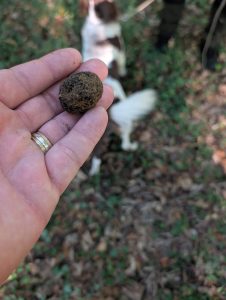
We met the owner, who took us to a chestnut forest at the back of the property. There we met Luca and Arturo, the truffle-sniffing dog. We learned about what types of truffles grow in that region and how the dog had been trained to find them. Then off we went. It didn’t take long before Arturo was digging vigorously in the ground. Luca pushed him aside and out came our first black truffle. Then a second and a third. They were so close to the starting area that I was convinced they were planted there to ensure us guests got a good experience. But as we went further into the forest, Arturo was finding truffles that even Luca seemed surprised to see. Through our hour walk, Arturo found about a dozen truffles of various sizes.
Our next stop was the olive oil processing area. The owners had just purchased some new equipment and our arrival coincided with the harvest. It was their first day using the machines and the staff was busy making adjustments to settings and hoses. It was pretty special to be watching an actual production line from so close up.
We finished with a four-course lunch – which seemed to be the minimum number of courses for most of our meals – on the patio. Even before the first course, we were provided bread which we drizzled with fresh olive oil. Each of the main courses featured the truffles that we harvested an hour earlier and was paired with a wine from their vineyard. We left their wonderful establishment stuffed and happy.
The second experience started in Sorrento, where we were given a tour of a lemon farm, including the processing area where they sorted and packed the lemons. The lemons here are harvested almost year-round, with lemons being at varying stages of ripeness all the time. This means that staff have to walk the groves each day to harvest the ripe lemons from every tree. This farm was a co-ownership between four families and each had their own “brand” of lemons. Staff had to juggle the sorting lines to ensure that the right lemons were being packed into the right boxes.
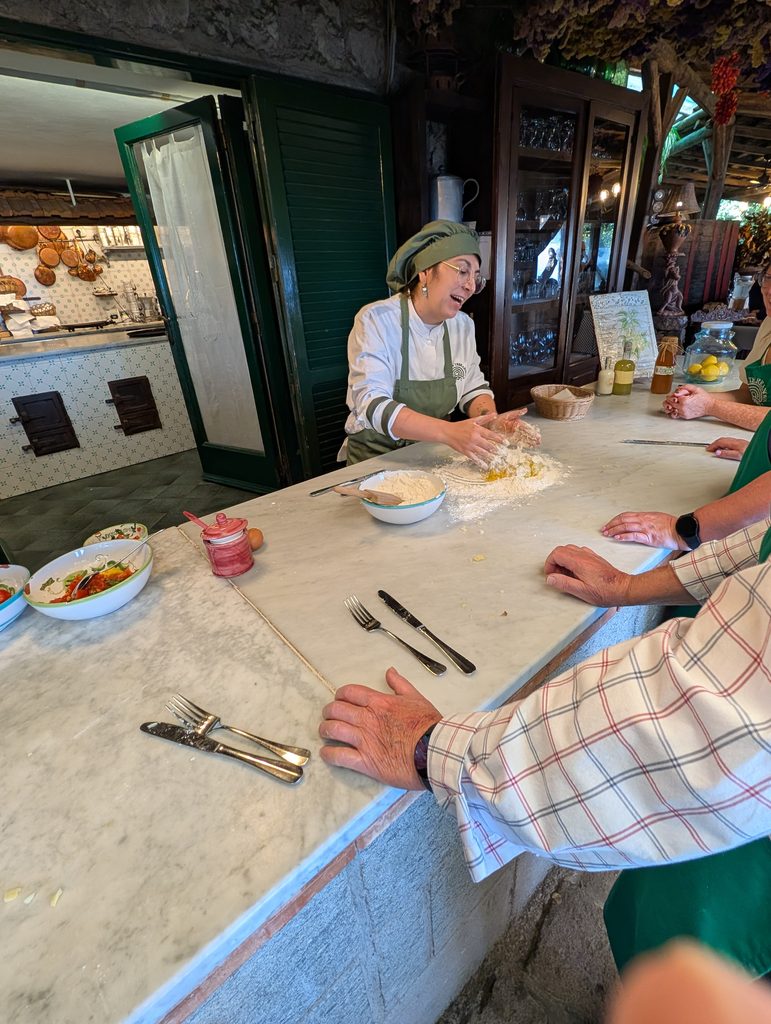
Our next stop was at the top of the mountain between Sorrento and Positano, where we could see the ocean on both sides. It was another agritourism experience. This time, a restaurant that also did private cooking classes out in the main restaurant. To tie into our morning visit, we set to work with our chef to make another four-course meal. We started with limoncello tiramisu because it was going to take an hour and a half to bake, followed by bruschetta. It was more of an immersive demonstration than a full-on cooking class, which was good because we got to eat the bruschetta, paired with wine, before moving onto the next two courses.
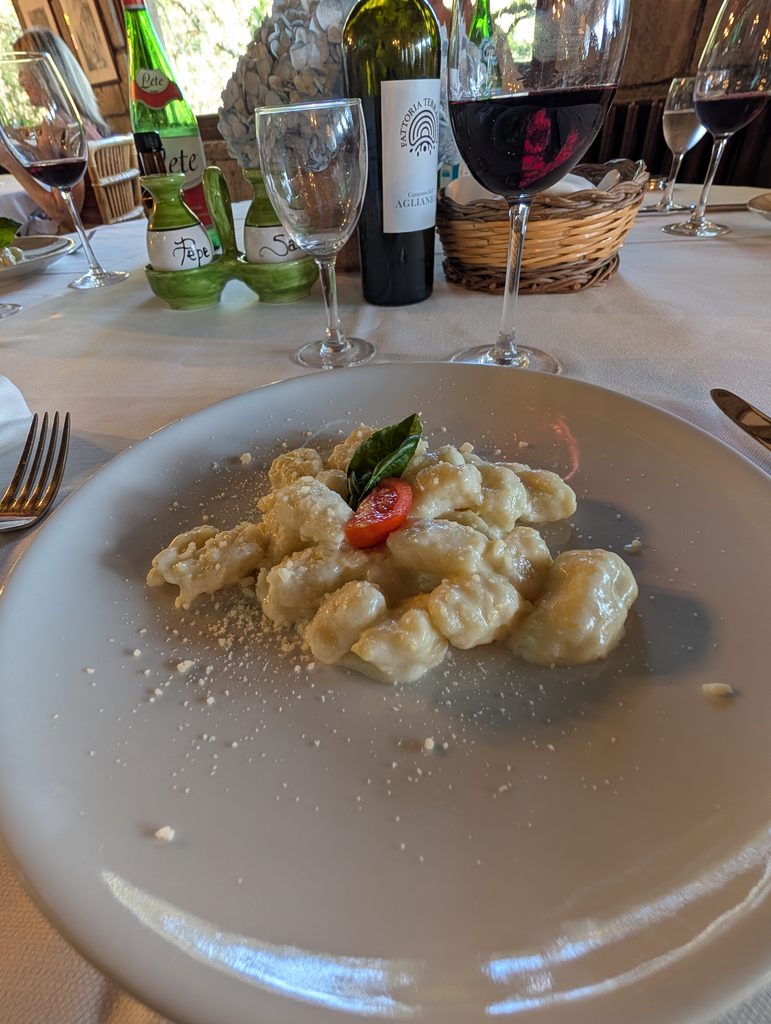
The third dish we made was lemon gnocchi. It was a lot of fun to mix the dough, create the ribbon and cut the pieces. Then she had us roll each piece across a special board to create grooves to hold the delicious lemon sauce we also made. The final dish was a rolled chicken breast, filled with cheese and crusted in lemon-rind and flour. Once all of the dishes were prepped, we were led to our table in the restaurant and enjoyed the meal we created. Each dish was, of course, paired with wine.
What was interesting about both experiences was that there was no marketing material about them at the actual locations. These seem to have been experiences that were created for visitors and booked by travel agents or through sites/apps like Viator or Airbnb experiences. In our case, our amazing travel agent, and former staff member, Sarah Gratta (sarah@reservedabroad.com) found and reserved them for us.
The other thing was that these experiences were small and intimate, and didn’t interrupt the core business of the places we visited. I think for many stakeholders throughout our region, there could be an opportunity to incorporate curated, small-group, onsite experiences that allow people to immerse themselves in what the stakeholders do day-in and day-out.
In talking with our business owners, one of the reservations is staffing. The concern is that implementing an experience will take staff away from their primary function, which would affect the bottom-line. What I noticed on our tours is that the staff we saw were either a) doing their normal jobs and letting us tag along / watch, or b) were dedicated to providing the paid experience. In Tuscany, Luca and Arturo make additional money through truffle-hunting. I am pretty sure our dishes had maybe one or two of the truffles we harvested and he got to sell the rest. Plus, he got paid to take us out and we gave him a tip because it was really cool.
The chef at the top of the mountain was dedicated to fulfilling the experiences. They did two to three per day with private groups. It looked like the max number that could fit at one of the counters was probably six. Having dedicated staff that were being paid from a separate revenue line meant that the restaurant kitchen could operate without worrying about one or two of their chefs being pre-occupied with groups.
Both of these methods work well for businesses because they are layering in additional revenues without interfering with their core functions. It also doesn’t have a huge initial investment because the experiences are complimentary to the core business. And, it seems, that the only marketing they have been doing is through companies that are known for providing visitors with experience options when they are in town.
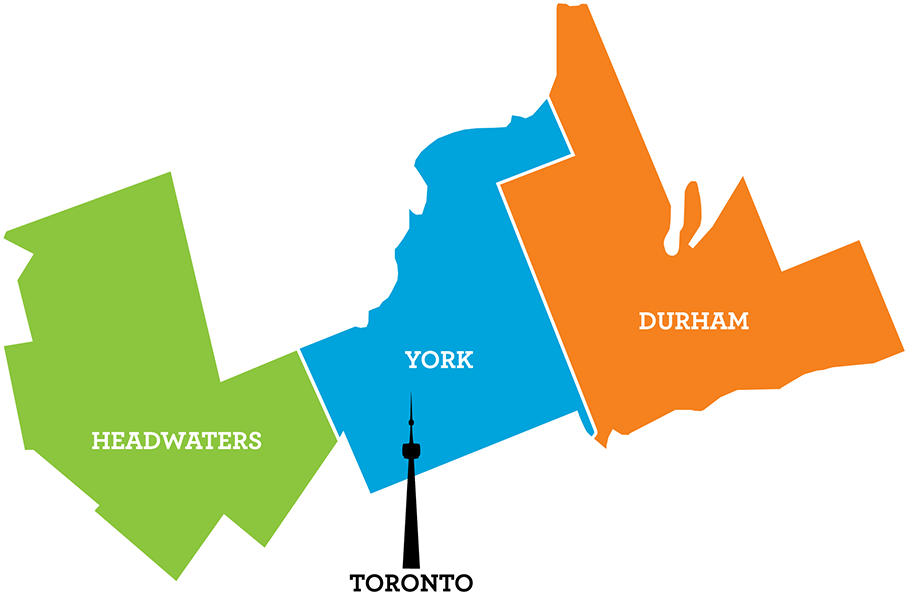
The most challenging piece of the puzzle is figuring out what type(s) of experiences you can create at your business. That’s where Central Counties can help. Our entire focus is helping you grow your business capacity to welcome and thrill visitors. Hopefully, this small read has inspired you to take the first step in doing something cool and complimentary at your business. If it has, reach out to us to get those creative juices flowing. Our Industry Relations Managers are your first point of contact.
Headwaters:
Rebecca Landman (rlandman@centralcounties.ca)
York:
Amanda Borges (aborges@centralcounties.ca)
Durham:
Lisa John-Mackenzie (ljohn-mackenzie@centralcounties.ca)
Have a great day!
Chuck
Inspired to explore new agritourism experiences at your business? Our upcoming Agritourism Networking Event at Elliott Tree Farm on November 10, 2026 is a great opportunity to connect with others, exchange ideas and explore the possibilities for agritourism across our region.
There’s still time to join us! RSVP by October 30. See more details below.