Each year, Chuck and the Industry Relations Managers (IRMs), meet with our municipal partners to determine what their priorities are and how we can help achieve them. A new, repeating theme in many of the conversations this past year was the notion of developing a passport program to entice visitors to spend more time, and money, in town. This struck a note for the team because we are working to encourage stakeholders to develop tour routes to achieve the same outcome – more people visiting and spending.
The staff were all intrigued by the idea of passport-style programs and wanted to learn more about how they are developed and implemented. After some research about what is taking place across North America, the IRMs decided that the culinary trails developed and managed by the Taste of Nova Scotia organization, were very close to the types of passport programs the municipal partners were talking about. So, with full bags and empty stomachs, they embarked on a four-day journey to learn both from Taste of Nova Scotia staff and the stakeholders participating in the programs. The full staff report can be found here.
The three passport trails that the IRMs learned about were the Lobster Trail, Chowder Trail and Good Cheer Trail. The Lobster Trail was the first one developed and 2024 marked its 10th year. This year, the Lobster Trail had 29 participating restaurants, the Chowder Trail had 60 and the Good Cheer Trail had 78 stops. During the team’s three full days on the ground, they were able to visit six participating businesses on the Good Cheer Trail and seven restaurants on the Lobster or Chowder trails.
Here are some of the key learnings and takeaways.
1. There needs to be a quarterback
As we preach about the stakeholder-led routes being developed across the region, the IRM team heard loud and clear both from Taste of Nova Scotia and the businesses participating in the trails, that someone needs to own the program. In this case, Taste of Nova Scotia does all of the leg work, from onboarding businesses to marketing the program. The business owners appreciate it because, like the businesses operating within CCT, they are often small operations with limited human resources to take on more projects. Having a governing body like Taste of Nova Scotia takes some of the risk of participation off of the business owners, but that doesn’t mean they don’t have to be engaged in the project.
2. Buy-in is important
The Taste of Nova Scotia is a member-based organization, so the members have already chosen to invest money to be members. Even so, there is a $250 participation fee for each of the trails a business wants to be part of. What this means is the each of the participating businesses are invested in the product and want it to succeed. For many of our municipal partners (who’s mandate it is to support all businesses equally), charging a fee to participate is a good way limit participation and focus attention on those that have paid to be part of the program. It also allows the “owner” of the passport trail to determine expectations of each of the participants – from in-location signage to social media.
3. Printed Passports vs. Apps
This was an interesting one because the business owners preferred “check-in” varied by trail. The brewers and other businesses that are part of the Good Cheer Trail prefer the paper passports and that is because they all want to take the time to get to know their guests and share their story with them. By having a physical passport that needs to be stamped, it all but guarantees that a personal interaction between the guest and staff will take place. On the other hand, the restaurants participating in the lobster and chowder trails prefer the app-based passport which, through geo-location, allows the guests to check themselves off as having been at the participating business when they are on-site. This is because through the busy months there are many, many staff that would need to be trained on the program and they would have to ensure that the physical stamp is never lost or misplaced. The owners/managers of the restaurants do acknowledge that what is lost using the app is their understanding of how much business was driven to them because of the program. Which leads to #4.
4. Reporting matters
The one aspect of the program that the Taste of Nova Scotia is trying to improve upon is reporting. When it was just the paper passports, it was very difficult for them, as program owners, to get a full understanding of how many were being used and how often. Their only clue was when the completed passports were turned in for prizing. However, many the restaurants and breweries themselves had a much better idea of the impact of the program because each of their guests would be asking for a stamp. But even so, some of the restaurants – especially some of the bigger ones with lots of tables and staff – still didn’t have a fulsome understanding of the impact of the program because they were not tracking the number of passports being tracked by their staff. The app version provides much better metrics for the Taste of Nova Scotia, who plan on sharing data with the participating businesses in 2025. Anecdotally, when asked about impact by the IRM team, the businesses are guestimating that about 20% of their business is driven by the trails. Good data will take the guessing out of it.
5. Good for visitors = good for residents
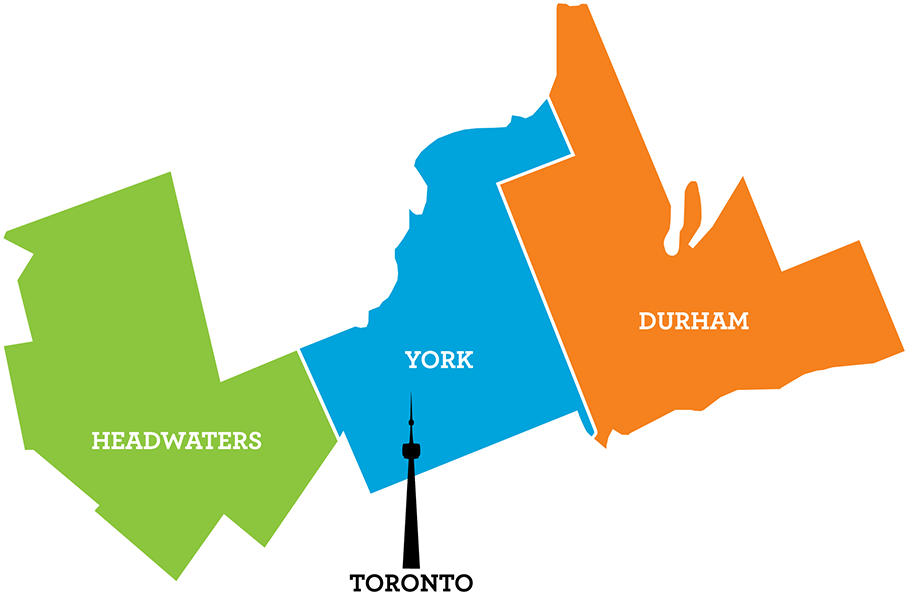
The population of Nova Scotia is just over one million people. In 2023, they welcomed approximately 2.2 million visitors, making the total potential participation in the trails around three and a quarter million. To put that into perspective, if you were to draw a circle with a 75km radius around any point within York, Durham and Headwaters, the population within that circle is roughly seven million people! One of the things noted by the IRMs was that the number of stops required by a visitor in order to get the first level of prizing was 10. For a true tourist visiting the province for a week, that means that every dinner and three lunches would have to be visited in order to be eligible. It was noted that there was not an expiry on the passports, which could motivate return travel. However, more noteworthy is that the locals have taken to trying to complete the trails. This is getting residents from all over the province to travel to try new restaurants they haven’t been to before, keeping more money in the province. That is a really interesting key learning, which could/should motivate trails that expand across the borders of several municipalities.
6. It is important to have a theme
Lobster and chowder are two things that most visitors to Nova Scotia already have on their bucket list of things to experience while there. Nova Scotia has that advantage over our region. They are known for their seafood. One of the things that that IRMs recommend is that for anything that we want to build here, it will have a better chance of success if it is themed. The Brunch Trail, Dumpling Trail, Spirits Trail, etc., brings certain images and expectations to mind and, because of the narrowness of its scope, engages potential visitors more than a generic “Tastes of [insert community here]” trails. While CCT may not be known culinarily for one or two specific things, we have an abundance of incredible eats and drinks that can be connected to develop and a large assortment of compelling trails.
7. Making prizing accessible
While probably not the main motivator for people to follow the trail, it is neat to be able to claim a prize just from eating great food and drinking great drinks at participating trail venues. The Taste of Nova Scotia program has different levels of prizing depending on how many stops a guest makes. In an area like CCT, where so many of trail guests will be travelling from less than an hour away, this makes for some great potential for creating prizing that is fun, desirable and branded. When planning out the prizing, it would be smart to think about something that provides the guest some sort of “bragging right” for completing a certain level of participation. This will lead to more people wanting to earn their prize.
The overarching takeaway by the IRMs is that there is great potential in trail development as a means to motivate visitation.
The idea of developing trails that are specific to municipalities, regions or Central Counties-wide is something we will be discussing more this year. If it is something that several partners want to investigate, it may be a good idea for us to collectively build out a custom app that makes it easy for visitors to check into the participating businesses, and easily skinned so that all of the participating municipalities, DMOs and CCT can have their own branded trails and information all operating from the same platform. This will save all involved a lot of money versus each of us developing our own app. If you are interested in exploring this further, please reach out directly to Chuck at cthibeault@centralcounties.ca.